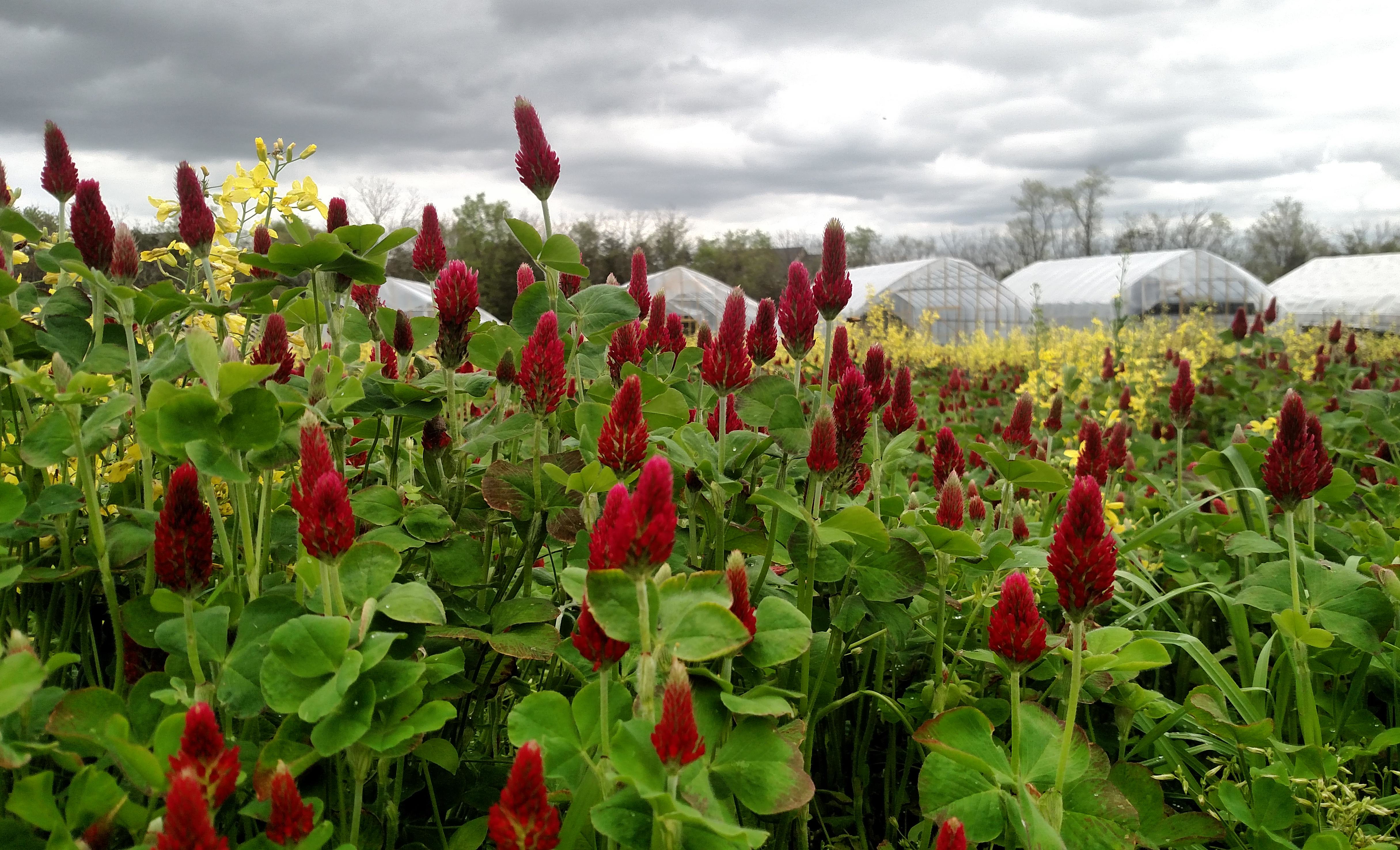
Join Future Harvest, the Million Acre Challenge, and University of Maryland Extension for a twilight pasture tour of Plow and Stars Farm. Participants will see and discuss several aspects of the operation, including: multi-species grazing, virtual fencing, transitioning conventional grain fields to regenerative agriculture, and silvopasture.
Multi-species grazing involves the use of two or more livestock species, such as cattle, sheep, and goats, to graze pastures. This approach takes advantage of their complementary grazing behaviors to improve pasture utilization and forage diversity. The session will highlight key soil health benefits, including improved nutrient cycling from diverse manure sources, enhanced soil structure, and increased soil organic matter. Silvopasture is the deliberate integration of trees and grazing livestock operations on the same land.
The workshop will also feature a demonstration of the Maryland Soil Health Card to assess physical and biological indicators of soil health, and monitor the outcomes of soil management practices
Please bring a reusable water bottle and dress for the weather. Rain date: August 13
About the speakers
Amanda Cather lives and farms in Montgomery County's Agricultural Reserve in Maryland, where she and her husband raise pastured lamb and poultry at Plow and Stars Farm. Amanda also serves as the Mid-Atlantic Deputy Director of American Farmland Trust. Before joining AFT, Amanda worked as the project director for the Million Acre Challenge. She managed small-scale sustainable vegetable farms in the Boston area, focusing on food access and public education. She loves spending time with her family, sheep, and working dogs. Amanda's work promotes regenerative agriculture, equitable land access and transfer, farm viability, profitability, and regional resilience.
Dr. Amanda Grev joined the University of Maryland Extension team in 2019. She serves as the Forage Extension Specialist and is based at the University of Maryland’s Western Maryland Research & Education Center. Originally from Minnesota, Amanda completed her undergraduate degree at North Dakota State University and received her M.S. and Ph.D. in Animal Science at the University of Minnesota. In her current role, she works to support forage producers, livestock owners, and industry professionals across the region through a combination of research and Extension programming in the areas of forage production and pasture management.
%20(1).jpg) Event Registration & Membership Portal
Event Registration & Membership Portal